Why I Train Clients in Their Living Rooms (And Why It Works Better Than You'd Think)
Wondering if in-home personal training actually works? Jay Bowers, a personal trainer in Mueller and Austin's central east side, explains what it really looks like — and who it's right for.
Jay Bowers
2 min read
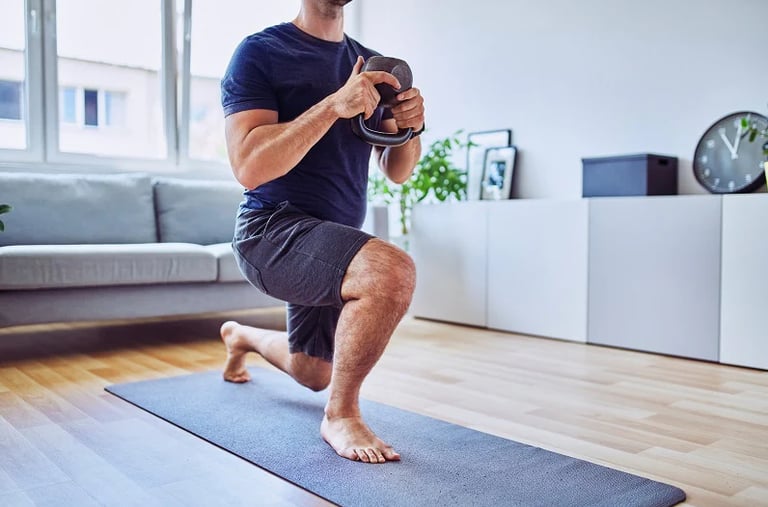
Most people, when they picture working with a personal trainer, picture a gym. Mirrors everywhere, someone spotting them on a bench press, maybe a little too much grunting from the corner. That image is so embedded in the fitness industry that when I tell someone I train clients in their homes, the first thing they say is usually some version of "wait, really?" — followed quickly by "but I don't have any equipment."
That's the part I love addressing, because it's almost never the real obstacle.
I've been doing in-home personal training in Austin for years now, and the clients I work with — mostly professionals in their 40s and 50s who live in neighborhoods like Mueller, Hyde Park, and Windsor Park — aren't looking for a gym experience. They're looking for results that fit into an already full life. Those are two different things, and confusing them is usually what keeps people stuck.
Here's what training in your home actually looks like. I show up with what we need. Resistance bands, a yoga mat, a set of dumbbells or kettlebell if necessary — most of the foundational movements that produce real, lasting changes in strength and body composition don't require a squat rack. What they require is consistency, good programming, and someone in the room who knows what they're doing. I can build you a genuinely effective program around whatever space you have, whether that's a two-car garage or a living room where we have to move the coffee table.
The other thing I hear a lot is that people feel self-conscious working out at home — that the gym, ironically, feels more private because everyone's focused on themselves. I get that. But in practice, I've found the opposite tends to be true after the first session or two. There's no commute. You're not waiting for equipment. You're not performing for anyone. It's just you, the work, and someone there to make sure you're doing it right. Most of my clients tell me they end up working harder than they ever did in a gym, simply because there's nowhere to hide and nothing to distract them.
The honest downside — and there is one — is that if you're someone who genuinely draws energy from a group environment, who needs the buzz of a crowded room to get moving, in-home training might not be your best fit. I'd rather tell you that upfront than waste your time and mine. But if you're someone who's been putting off consistent training because the logistics of getting to a gym keep getting in the way, I'd argue that's not really a motivation problem. It's a friction problem. And I can solve that one.
I'm based in Mueller and I work with clients across Austin's central east side. If you've been curious about whether this could work for you, the best way to find out is a conversation. No commitment, no pitch — just an honest talk about where you are and where you want to be.